

Updated Sep 01, 2023 Verified AZ-140 dumps Q&As - 100% Pass
New 2023 Latest Questions AZ-140 Dumps - Use Updated Microsoft Exam
NEW QUESTION # 89 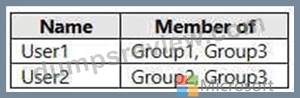
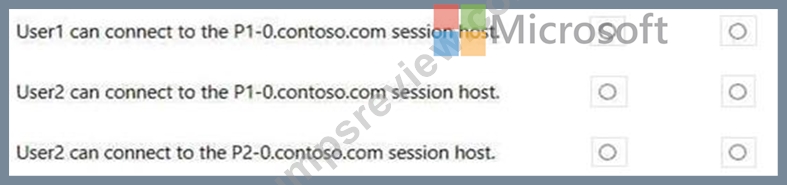
Answer:
Explanation: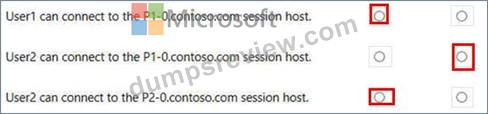
NEW QUESTION # 90
You are designing an Azure Virtual Desktop deployment.
You identify the network latency between the locations where users reside and the planned deployment.
What should you use to identify the best Azure region to deploy the host pool?
- A. Azure Monitor for Azure Virtual Desktop
- B. Azure Advisor
- C. Azure Virtual Desktop Experience Estimator
- D. Azure Traffic Manager
Answer: C
Explanation:
Reference:
https://azure.microsoft.com/en-gb/services/virtual-desktop/assessment/
NEW QUESTION # 91
You have a Windows Virtual Desktop deployment.
You need to ensure that all the connections to the managed resources in the host pool require multi-factor authentication (MFA).
Which two settings should you modify in a conditional access policy? To answer, select the appropriate options in the answer area.
NOTE: Each correct selection is worth one point.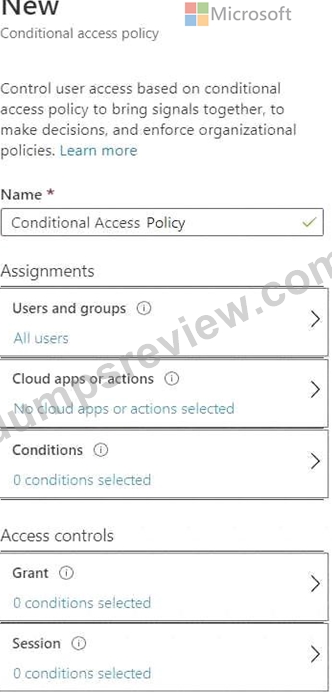
Answer:
Explanation: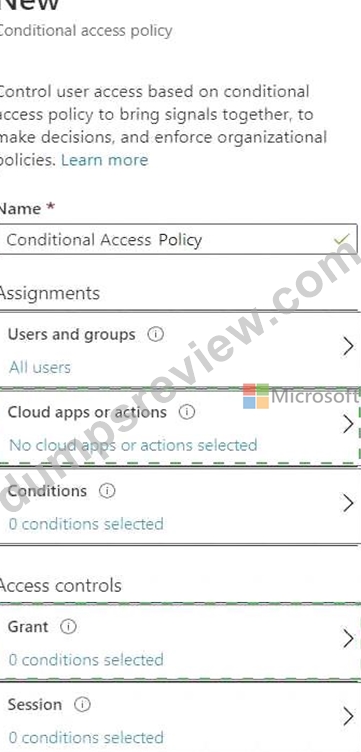
Explanation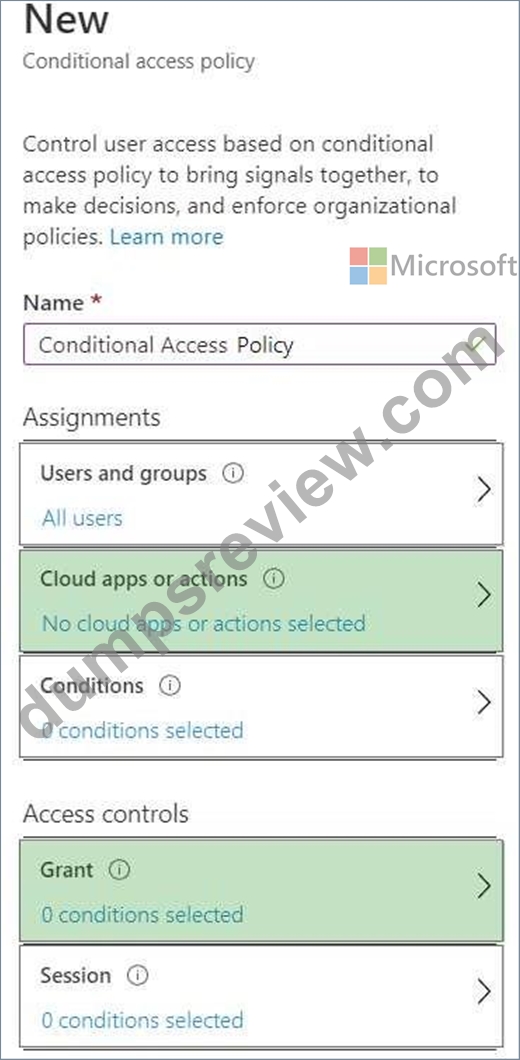
Reference:
https://docs.microsoft.com/en-us/azure/active-directory/authentication/tutorial-enable-azure-mfa
NEW QUESTION # 92
You are automating the deployment of an Azure Virtual Desktop host pool.
You deploy the Azure Resource Manager (ARM) template shown in the following exhibit.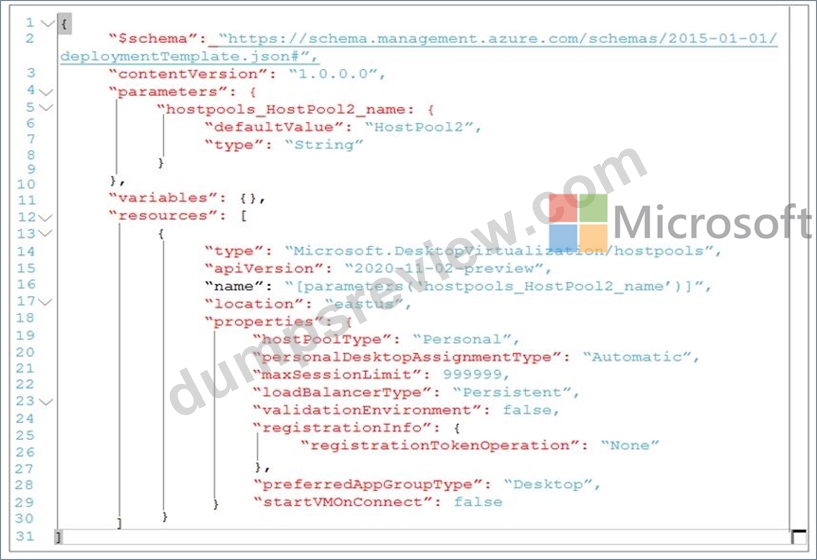
Use the drop-down menus to select the answer choice that completes each statement based on the information presented in the Dockerfile.
NOTE: Each correct selection is worth one point.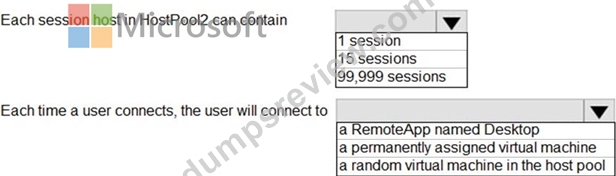
Answer:
Explanation: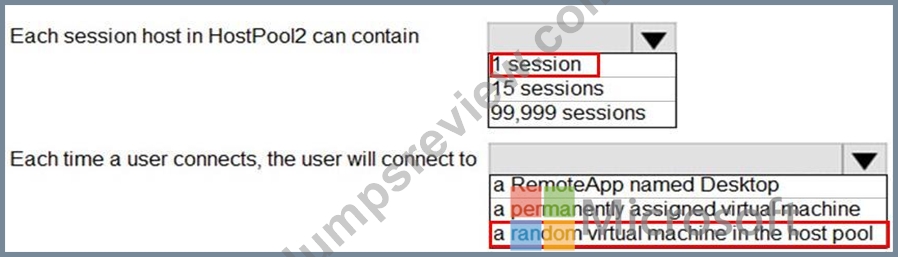
Reference:
https://docs.microsoft.com/en-us/azure/virtual-desktop/virtual-desktop-fall-2019/configure-host-pool-personal-desktop-assignment-type-2019
NEW QUESTION # 93
Note: This question is part of a series of questions that present the same scenario. Each question in the series contains a unique solution that might meet the stated goals. Some question sets might have more than one correct solution, while others might not have a correct solution.
After you answer a question in this section, you will NOT be able to return to it. As a result, these questions will not appear in the review screen.
You have a Windows Virtual Desktop host pool that contains five session hosts. The session hosts run Windows 10 Enterprise multi-session.
You need to prevent users from accessing the internet from Windows Virtual Desktop sessions. The session hosts must be allowed to access all the required Microsoft services.
Solution: You configure rules in the network security group (NSG) linked to the subnet of the session hosts.
Does that meet the goal?
- A. Yes
- B. No
Answer: A
Explanation:
Reference:
https://docs.microsoft.com/en-us/azure/virtual-network/tutorial-filter-network-traffic
NEW QUESTION # 94
You have a shared image gallery that contains the Windows 10 images shown in the following table.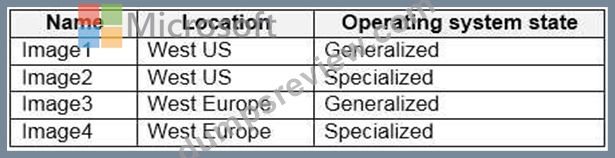
You create a Windows Virtual Desktop deployment that has the following settings:
* Host pool name: Pool1
* Location: West US
* Host pool type: Personal
Which images can you use for the session hosts?
- A. Image1 and Image3 only
- B. Image1 only
- C. Image1 and Image2 only
- D. Image2 only
- E. Image1, Image2, Image3, and Image4
Answer: A
Explanation:
Explanation/Reference:
https://azure.microsoft.com/en-in/blog/vm-image-blog-post/
NEW QUESTION # 95
You have an Azure subscription that contains a virtual machine named VM1. VM1 runs a customized version of Windows 10 Enterprise.
You generalize the operating system on VM1 and shut down the virtual machine.
You need to deploy additional virtual machines based on an image of VM1 by using the Azure portal.
Which three actions should you perform in sequence? To answer, move the appropriate actions from the list of actions to the answer area and arrange them in the correct order.
Select and Place: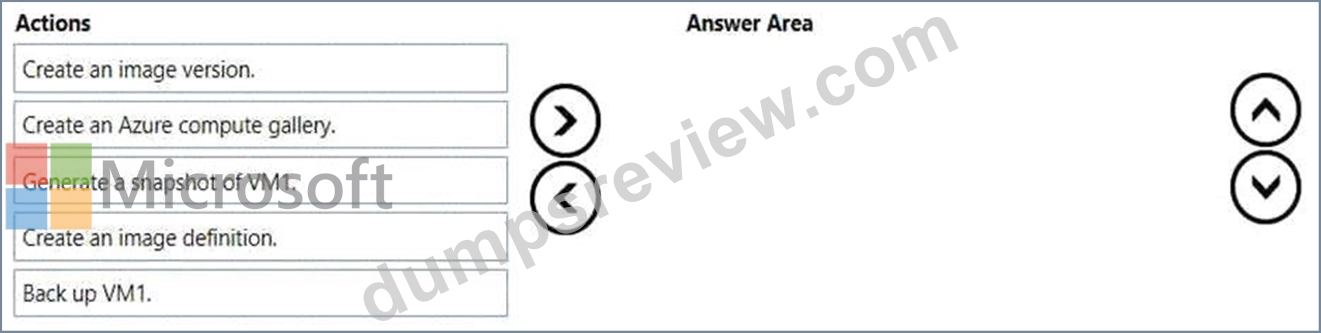
Answer:
Explanation: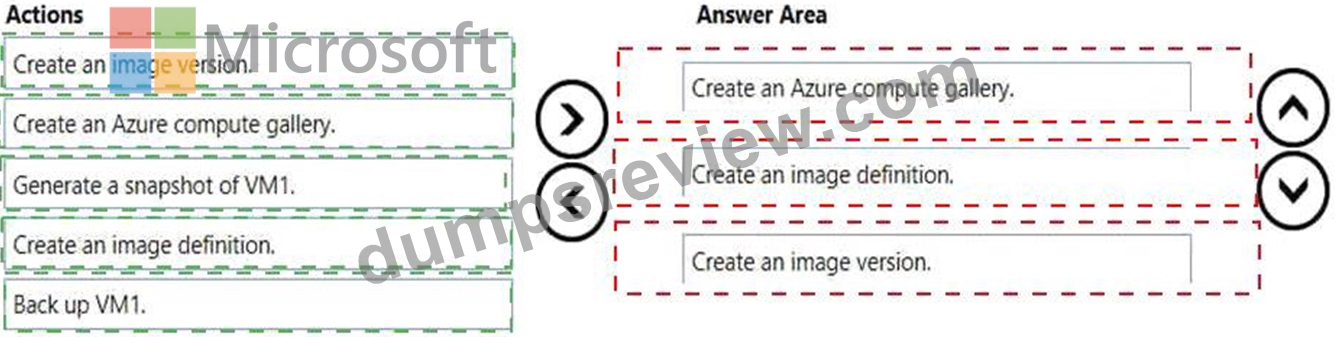
Explanation
A picture containing graphical user interface Description automatically generated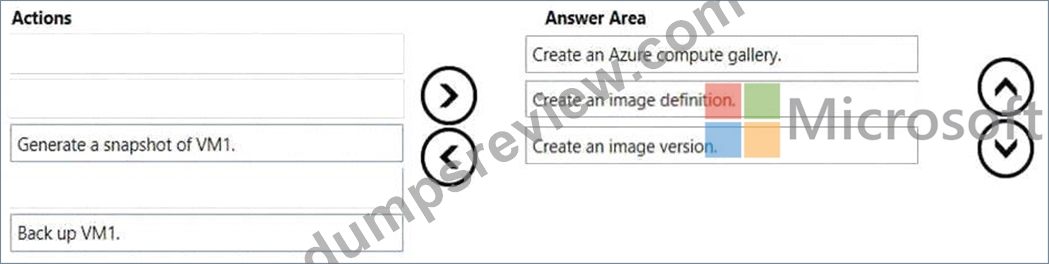
NEW QUESTION # 96
You have an Azure virtual machine named VM1 that runs Windows 10 Enterprise multi-session.
You plan to add language packs to VM1 and create a custom image of VM1 for a Windows Virtual Desktop host pool.
You need to ensure that modern apps can use the additional language packs when you deploy session hosts by using the custom image.
Which command should you run first? To answer, select the appropriate options in the answer area.
NOTE: Each correct selection is worth one point.
Answer:
Explanation:
Reference:
https://docs.microsoft.com/en-us/troubleshoot/windows-server/deployment/issues-appx-cleanup-maintenance-task
https://docs.microsoft.com/en-us/powershell/module/scheduledtasks/disable-scheduledtask?view=windowsserver2019-ps
NEW QUESTION # 97
HOTSPOT
You have a Windows Virtual Desktop host pool that has a max session limit of 15. Disconnected sessions are signed out immediately.
The session hosts for the host pool are shown in the following exhibit.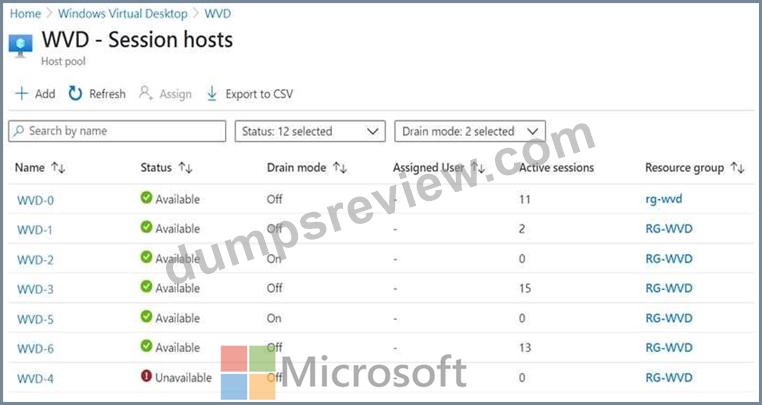
Use the drop-down menus to select the answer choice that completes each statement based on the information presented in the graphic.
NOTE: Each correct selection is worth one point.
Hot Area: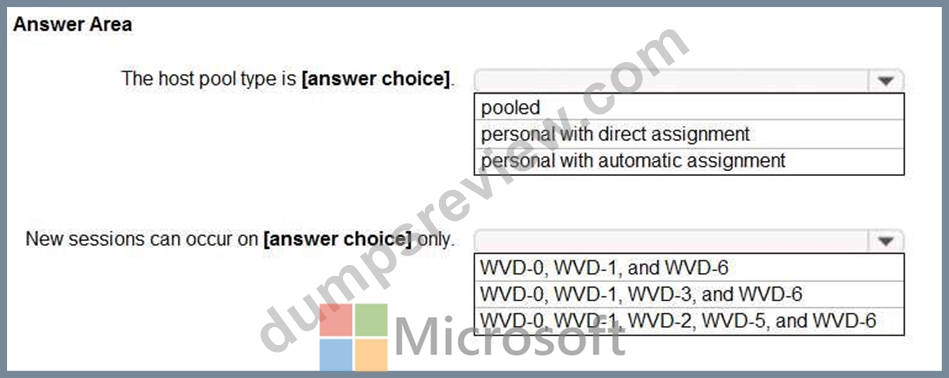
Answer:
Explanation: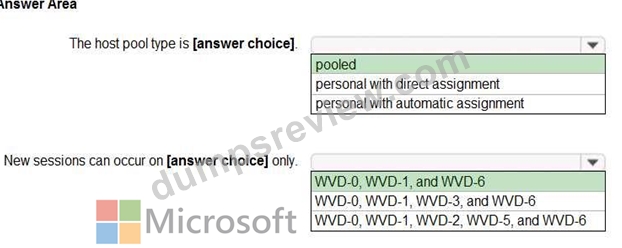
Explanation/Reference:
https://docs.microsoft.com/en-us/azure/virtual-desktop/set-up-scaling-script
NEW QUESTION # 98
You have a Windows Virtual Desktop host pool.
You need to install Microsoft Antimalware for Azure on the session hosts.
What should you do?
- A. From a Group Policy Object (GPO), enable Windows 10 security features.
- B. Sign in to each session host and install a Windows feature.
- C. Configure the RDP Properties of the host pool.
- D. Add an extension to each session host.
Answer: D
Explanation:
Reference:
https://docs.microsoft.com/en-us/azure/security/fundamentals/antimalware
NEW QUESTION # 99
You deploy a Windows Virtual Desktop host pool named Pool1.
You have an Azure Storage account named store1 that stores FSLogix profile containers in a share named profiles.
You need to configure the path to the storage containers for the session hosts.
Which path should you use?
- A. https://store1.blob.core.windows.net/profiles
- B. https://store1.file.core.windows.net/profiles
- C. \\store1.blob.core.windows.net\profiles
- D. \\store1.file.core.windows.net\profiles
Answer: D
Explanation:
Explanation
https://docs.microsoft.com/en-us/azure/virtual-desktop/store-fslogix-profile Azure offers multiple storage solutions that you can use to store your FSLogix profile container. We recommend storing FSLogix profile containers on Azure Files for most of our customers.
Topic 2, Contoso. Ltd
Case study
This is a case study. Case studies are not timed separately. You can use as much exam time as you would like to complete each case. However, there may be additional case studies and sections on this exam. You must manage your time to ensure that you are able to complete all questions included on this exam in the time provided.
To answer the questions included in a case study, you will need to reference information that is provided in the case study. Case studies might contain exhibits and other resources that provide more information about the scenario that is described in the case study. Each question is independent of the other questions in this case study.
At the end of this case study, a review screen will appear. This screen allows you to review your answers and to make changes before you move to the next section of the exam. After you begin a new section, you cannot return to this section.
To start the case study
To display the first question in this case study, click the button. Use the buttons in the left pane to explore the content of the case study before you answer the questions. Clicking these buttons displays information such as business requirements, existing environment, and problem statements. If the case study has an All Information tab, note that the information displayed is identical to the information displayed on the subsequent tabs. When you are ready to answer a question, click the button to return to the question.
Overview
Contoso, Ltd. is a law firm that has a main office in Montreal and branch offices in Paris and Seattle. The Seattle branch office opened recently.
Contoso has an Azure subscription and uses Microsoft 365.
Existing Infrastructure. Active Directory
The network contains an on-premises Active Directory domain named contoso.com and an Azure Active Directory (Azure AD) tenant. One of the domain controllers runs as an Azure virtual machine and connects to a virtual network named VNET1. All internal name resolution is provided by DNS server that run on the domain controllers.
The on-premises Active Directory domain contains the organizational units (OUs) shown in the following table.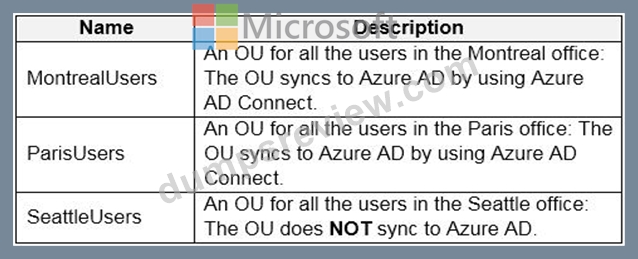
The on-premises Active Directory domain contains the users shown in the following table.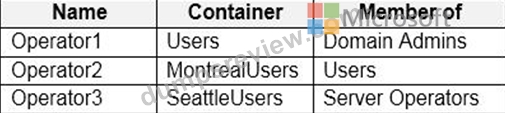
The Azure AD tenant contains the cloud-only users shown in the following table.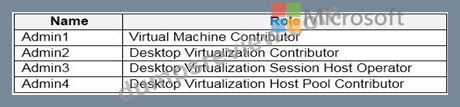
Existing Infrastructure. Network Infrastructure
All the Azure virtual networks are peered. The on-premises network connects to the virtual networks.
All servers run Windows Server 2019. All laptops and desktop computers run Windows 10 Enterprise.
Since users often work on confidential documents, all the users use their computer as a client for connecting to Remote Desktop Services (RDS).
In the West US Azure region, you have the storage accounts shown in the following table.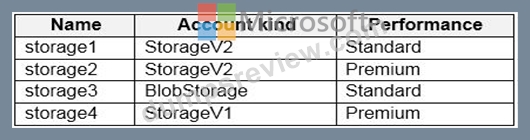
Existing Infrastructure. Remote Desktop Infrastructure
Contoso has a Remote Desktop infrastructure shown in the following table.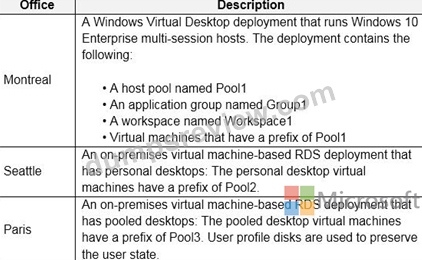
Requirements. Planned Changes
Contoso plans to implement the following changes:
* Implement FSLogix profile containers for the Paris offices.
* Deploy a Windows Virtual Desktop host pool named Pool4.
* Migrate the RDS deployment in the Seattle office to Windows Virtual Desktop in the West US Azure region.
Requirements. Pool4 Configuration
Pool4 will have the following settings:
* Host pool type: Pooled
* Max session limit: 7
* Load balancing algorithm: Depth-first
* Images: Windows 10 Enterprise multi-session
* Virtual machine size: Standard D2s v3
* Name prefix: Pool4
* Number of VMs: 5
* Virtual network: VNET4
Requirements. Technical Requirements
Contoso identifies the following technical requirements:
* Before migrating the RDS deployment in the Seattle office, obtain the recommended deployment configuration based on the current RDS utilization.
* For the Windows Virtual Desktop deployment in the Montreal office, disable audio output in the device redirection settings.
* For the Windows Virtual Desktop deployment in the Seattle office, store the FSLogix profile containers in Azure Storage.
* Enable Operator2 to modify the RDP Properties of the Windows Virtual Desktop deployment in the Montreal office.
* From a server named Server1, convert the user profile clicks to the FSLogix profile containers.
* Ensure that the Pool1 virtual machines only run during business hours.
* Use the principle of least privilege.
NEW QUESTION # 100
HOTSPOT -
You have an Azure subscription named Subscription1 that contains the users shown in the following table.
Subscription1 contains the Azure Virtual Desktop host pools shown in the following table.
Subscription1 contains the Azure Virtual Desktop application groups shown in the following table.
You perform the role assignments shown in the following table.
For each of the following statements, select Yes if the statement is true. Otherwise, select No.
NOTE: Each correct selection is worth one point.
Answer:
Explanation:
Yes, No, Yes
NEW QUESTION # 101
You need to configure a conditional access policy to meet the authentication requirements.
What should you include in the policy configuration? To answer, select the appropriate options in the answer area.
NOTE Each correct selection is worth one point.
Answer:
Explanation:
NEW QUESTION # 102
You have an Azure subscription that contains a hybrid Azure Active Directory (Azure AD) tenant and two domain-joined Azure virtual machines. The virtual machines run Windows Server 2019 and contain managed disks.
You plan to deploy an Azure Virtual Desktop host pool that will use a Storage Spaces Direct Scale-Out File Server to host user profiles.
You need to ensure that the virtual machines can host the Storage Spaces Direct deployment. The solution must meet the following requirements:
* Ensure that the user profiles are available if a single server falls.
* Minimize administrative effort.
What should you do? To answer, select the appropriate options In the answer are a. NOTE: Each correct selection is worth one point.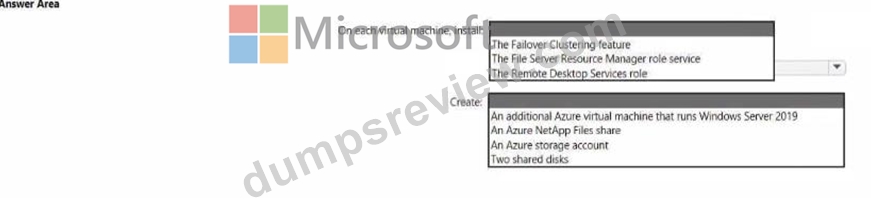
Answer:
Explanation: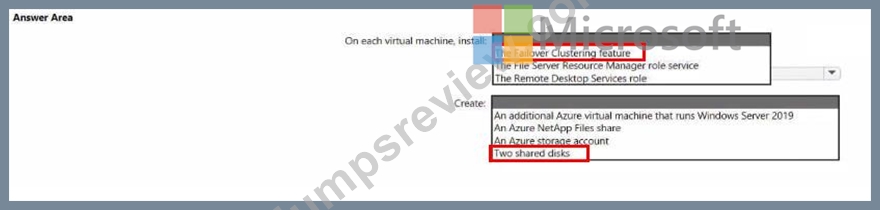
Reference:
https://docs.microsoft.com/en-us/windows-server/storage/storage-spaces/deploy-storage-spaces-direct
NEW QUESTION # 103
You have the devices shown in the following table.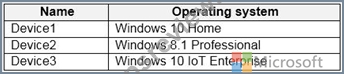
You plan to deploy Windows Virtual Desktop for client access to remove virtualized apps.
Which devices support the Remote Desktop client?
- A. Device1 and Device3 only
- B. Device1 and Device2 only
- C. Device1 only
- D. Device1, Device2, and Device3
Answer: A
Explanation:
Reference:
https://docs.microsoft.com/en-us/windows-server/remote/remote-desktop-services/clients/windowsdesktop Applies to: Windows 10, Windows 10 IoT Enterprise, and Windows 7 You can use the Remote Desktop client for Windows Desktop to access Windows apps and desktops remotely from a different Windows device.
The new Remote Desktop client (MSRDC) supports Windows 10, Windows 10 IoT Enterprise, and Windows
7 client devices:
Windows 64-bit
Windows 32-bit
Windows ARM64
NEW QUESTION # 104
You have an Azure Virtual Desktop deployment.
You are configuring the outbound firewall settings for the host pool.
Which outbound URL and outbound port should you configure to ensure that the host machines maintain Windows activation? To answer, select the appropriate options In the answer area.
NOTE: Each correct selection is worth one point.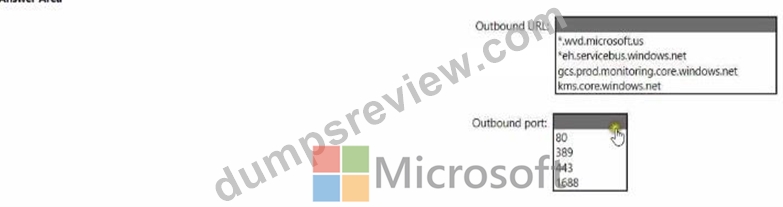
Answer:
Explanation:
Explanation
NEW QUESTION # 105
You have an Azure Virtual Desktop host pool named Pool1 and an Azure Storage account named storage1. Pool1 and storage1 are in the same Azure region.
The current network utilization of the session hosts during peak hours is 95%.
You plan to use FSLogix profile containers stored in storage1 for users that connect to Pool1.
You need to configure the session hosts and storage1 to minimize network latency when loading and updating profiles.
What should you do? To answer, select the appropriate options in the answer area.
NOTE: Each correct selection is worth one point.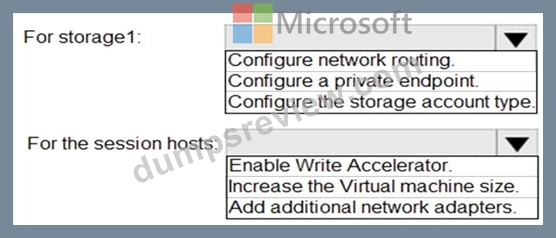
Answer:
Explanation: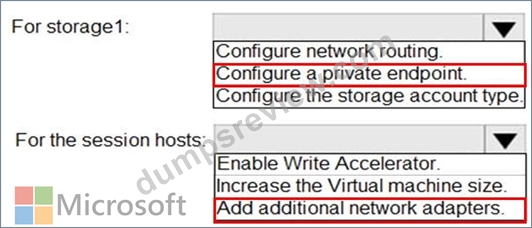
Reference:
https://docs.microsoft.com/en-us/azure/architecture/example-scenario/wvd/windows-virtual-desktop-fslogix
NEW QUESTION # 106
You create an Azure Virtual Desktop host pool as shown in the following exhibit.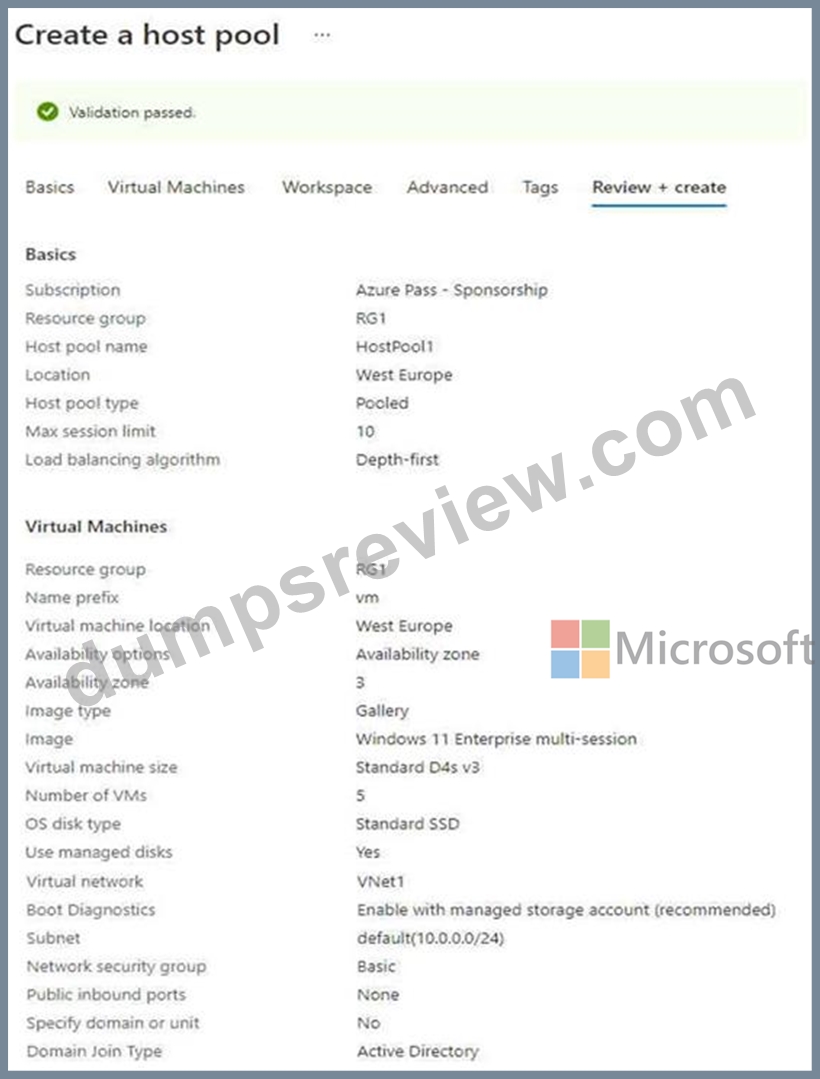
Use the drop-down menus to select the answer choice that answers each question based on the information presented in the graphic.
NOTE: Each correct selection is worth one point.
Hot Area: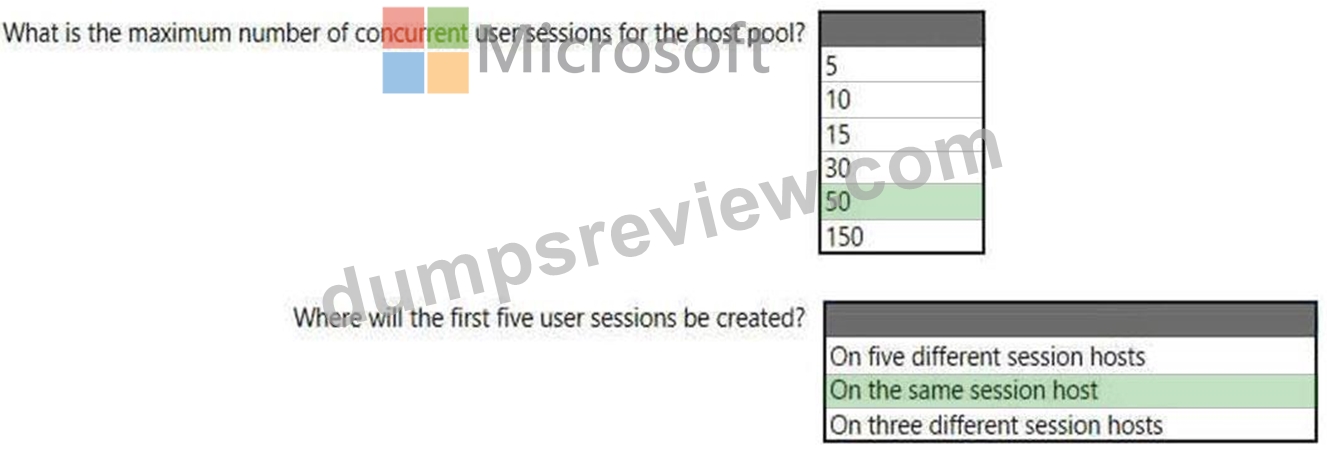
Answer:
Explanation: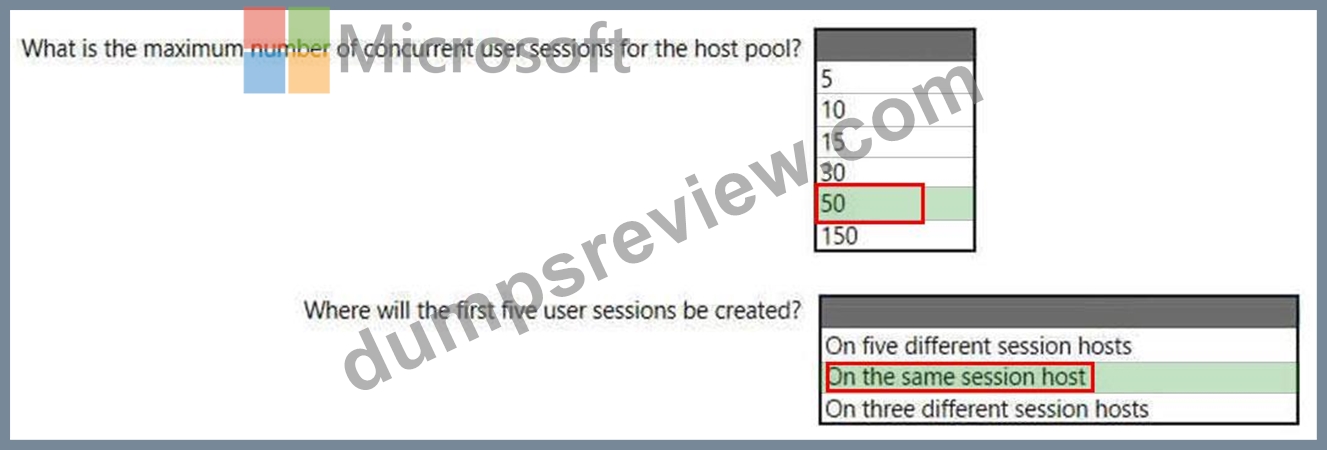
NEW QUESTION # 107
Which users can create Pool4, and which users can join session hosts to the domain? To answer, select the appropriate options in the answer area.
NOTE: Each correct selection is worth one point.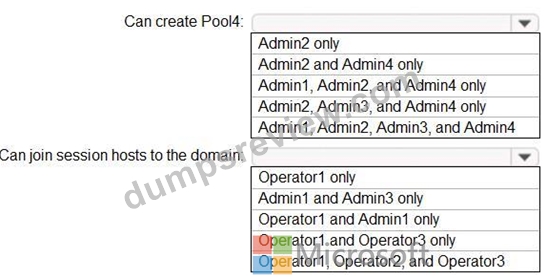
Answer:
Explanation:
Explanation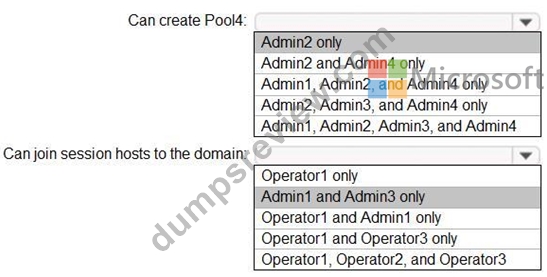
NEW QUESTION # 108
You plan to deploy Windows Virtual Desktop.
You need to create Azure NetApp Files storage to store FSLogix profile containers.
Which four actions should you perform in sequence after you register the NetApp Resource Provider? To answer, move the appropriate actions from the list of actions to the answer area and arrange them in the correct order.
NOTE: More than one order of answer choices is correct. You will receive credit for any of the correct orders you select.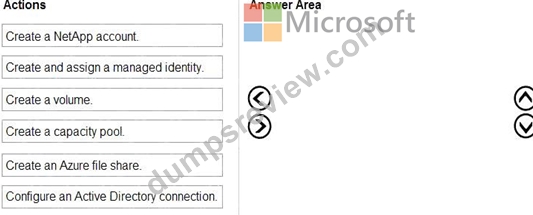
Answer:
Explanation: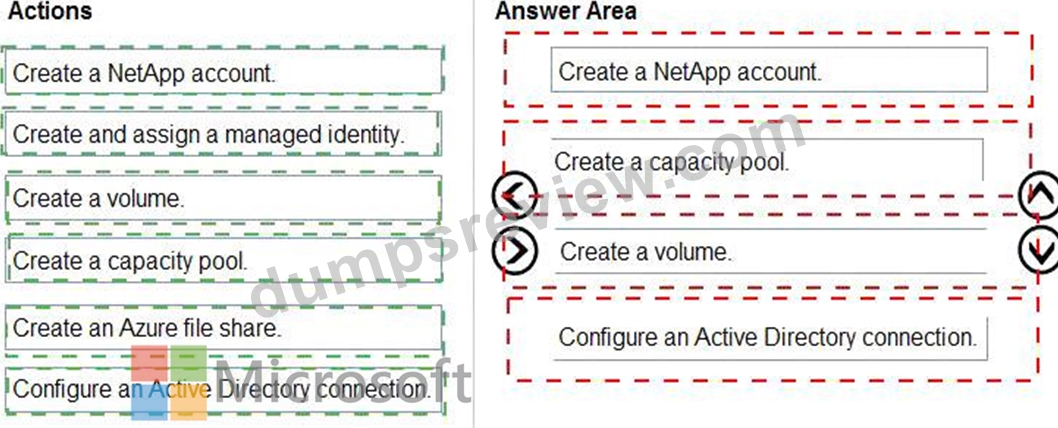
Explanation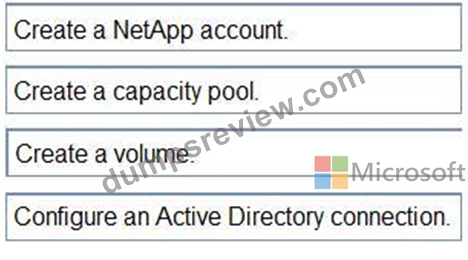
Reference:
https://docs.microsoft.com/en-us/azure/azure-netapp-files/azure-netapp-files-quickstart-set-up-account-create-vo
NEW QUESTION # 109
You are automating the deployment of an Azure Virtual Desktop host pool.
You deploy the Azure Resource Manager (ARM) template shown in the following exhibit.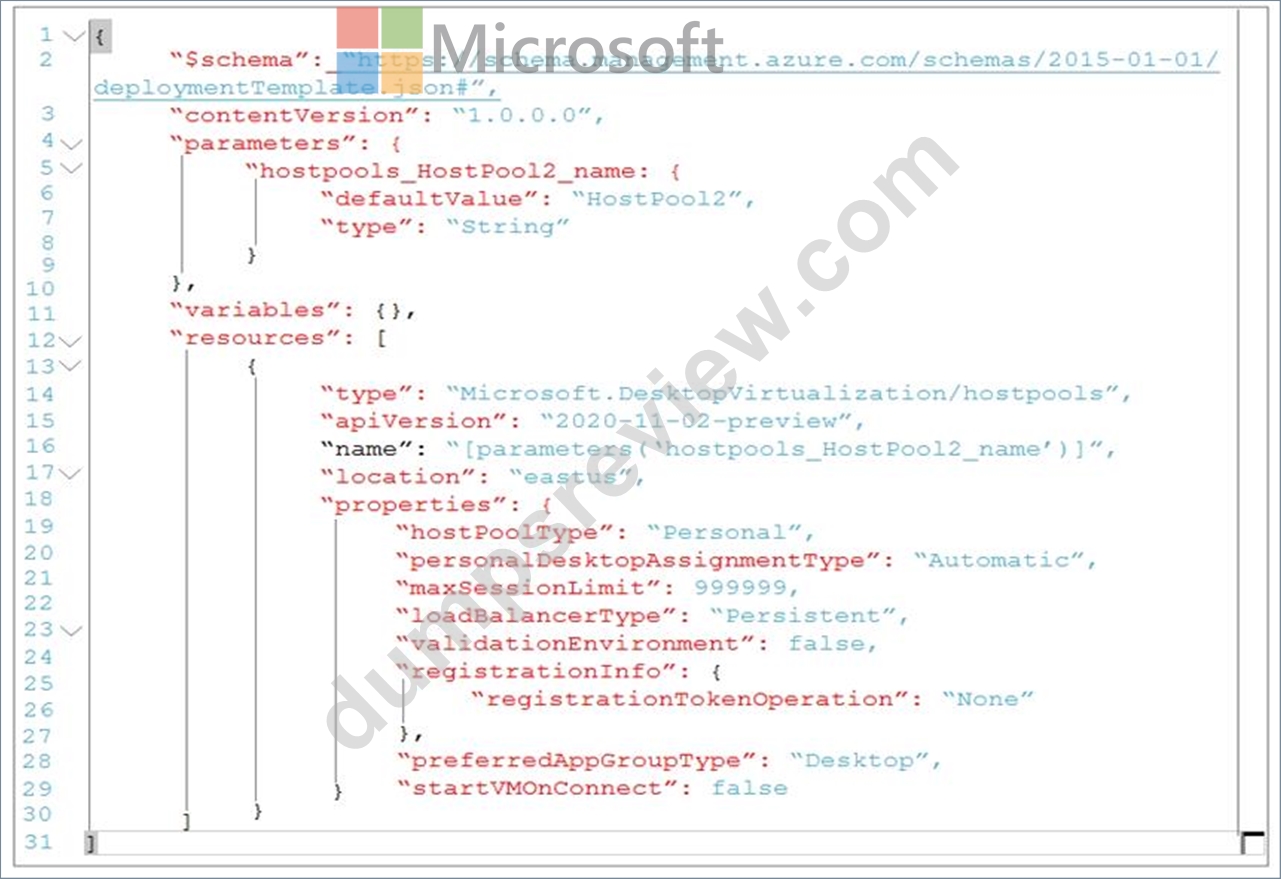
Use the drop-down menus to select the answer choice that completes each statement based on the information presented in the Dockerfile.
NOTE: Each correct selection is worth one point.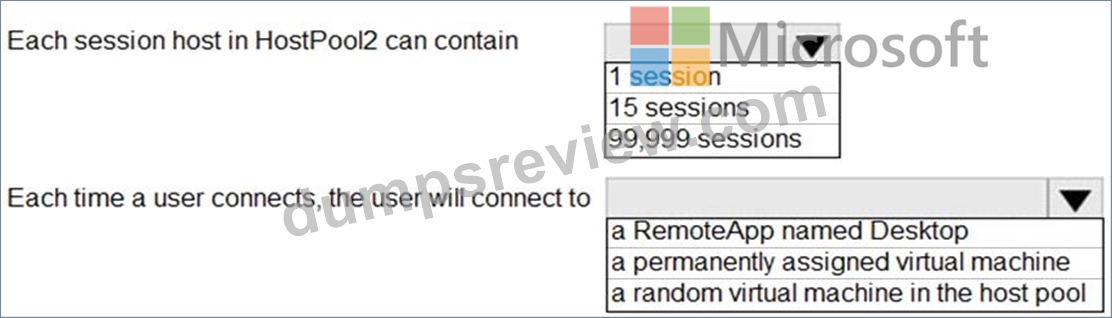
Answer:
Explanation: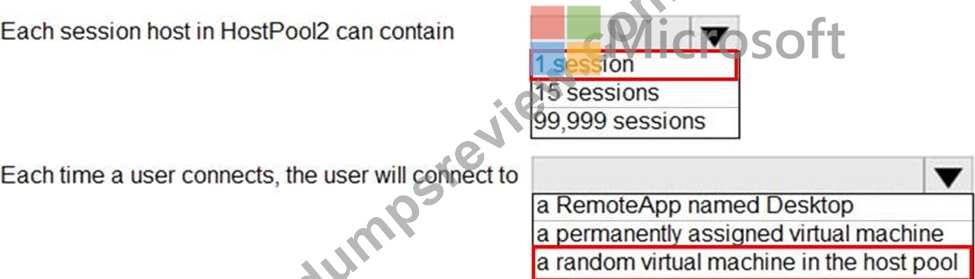
Reference:
https://docs.microsoft.com/en-us/azure/virtual-desktop/virtual-desktop-fall-2019/configure-host-pool-personal-desktop-assignment-type-2019
NEW QUESTION # 110
You have a Windows Virtual Desktop deployment.
You have a session host named Host1 that has the disk layout shown in the exhibit. (Click the Exhibit tab.)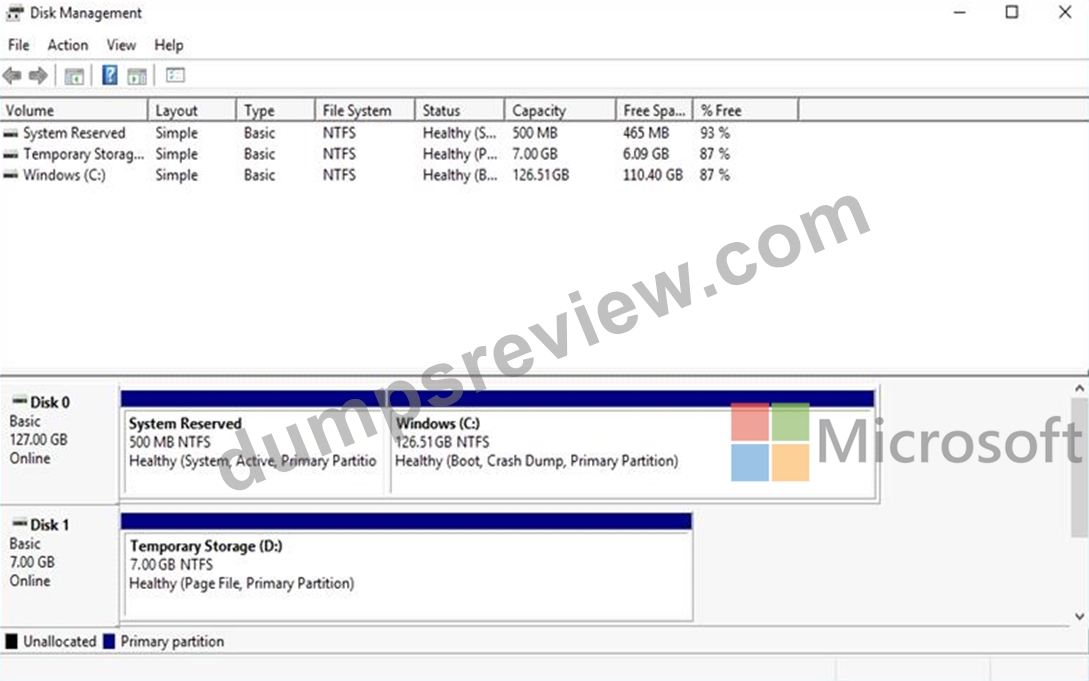
You plan to deploy an app that must be installed on D.
The app requires 500 GB of disk space.
You need to add a new data disk that will be assigned the drive letter D.
The solution must maintain the current performance of Host1.
Which four actions should you perform in sequence? To answer, move the appropriate actions from the list of actions to the answer area and arrange them in the correct order.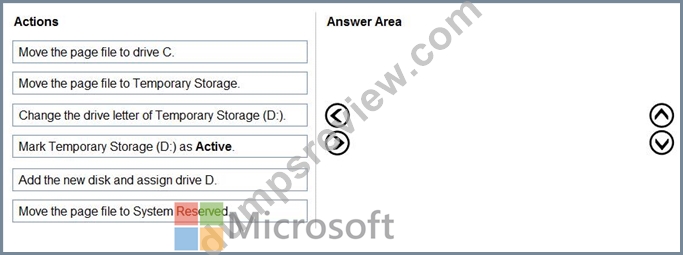
Answer:
Explanation: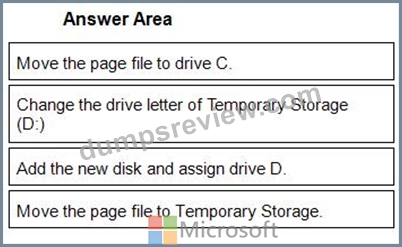
1 - Move the page file to drive C.
2 - Change the drive letter of Temporary Storage (D:)
3 - Add the new disk and assign drive D.
4 - Move the page file to Temporary Storage.
Reference:
https://www.azurecorner.com/change-temporary-drive-azure-vm-use-d-persistent-data-disks/
NEW QUESTION # 111
HOTSPOT
You have an Azure virtual machine named VM1 that runs Windows 10 Enterprise multi-session.
You plan to add language packs to VM1 and create a custom image of VM1 for a Windows Virtual Desktop host pool.
You need to ensure that modern apps can use the additional language packs when you deploy session hosts by using the custom image.
Which command should you run first? To answer, select the appropriate options in the answer area.
NOTE: Each correct selection is worth one point.
Hot Area: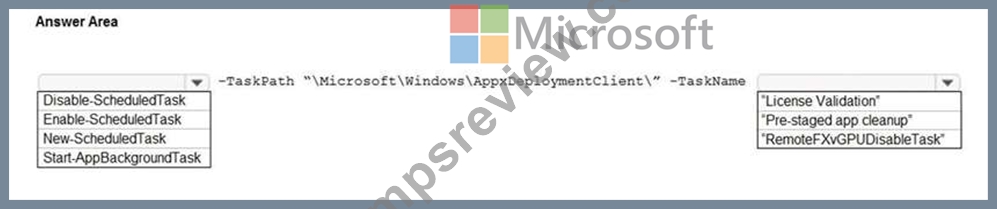
Answer:
Explanation: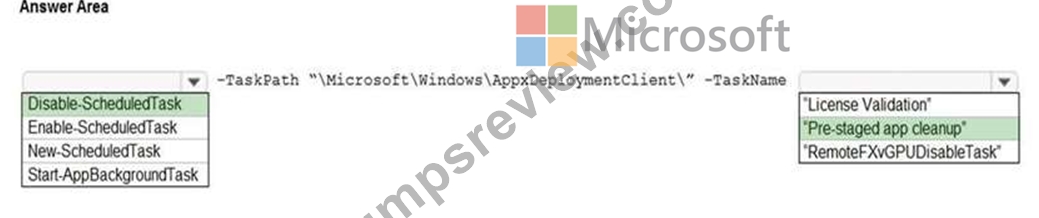
Explanation/Reference:
https://docs.microsoft.com/en-us/azure/virtual-desktop/language-packs
https://docs.microsoft.com/en-us/troubleshoot/windows-server/deployment/issues-appx-cleanup-maintenance- task
https://docs.microsoft.com/en-us/powershell/module/scheduledtasks/disable-scheduledtask?
view=windowsserver2019-ps
NEW QUESTION # 112
You need to configure the user settings of Admin1 to meet the user profile requirements.
What should you do?
- A. Modify the membership of the FSLogix ODFC Exclude List group.
- B. Modify the HKLM\SOFTWARE\FSLogix\Profiles registry settings.
- C. Modify the HKLM\SOFTWARE\FSLogix\ODFC registry settings.
- D. Modify the membership of the FSLogix Profile Exclude List group.
Answer: A
Explanation:
Reference:
https://docs.microsoft.com/en-us/fslogix/overview
https://docs.microsoft.com/en-us/fslogix/configure-profile-container-tutorial#set-up-include-and-exclude-usergro
NEW QUESTION # 113
You have a Windows Virtual Desktop host pool that has a max session limit of 15. Disconnected sessions are signed out immediately.
The session hosts for the host pool are shown in the following exhibit.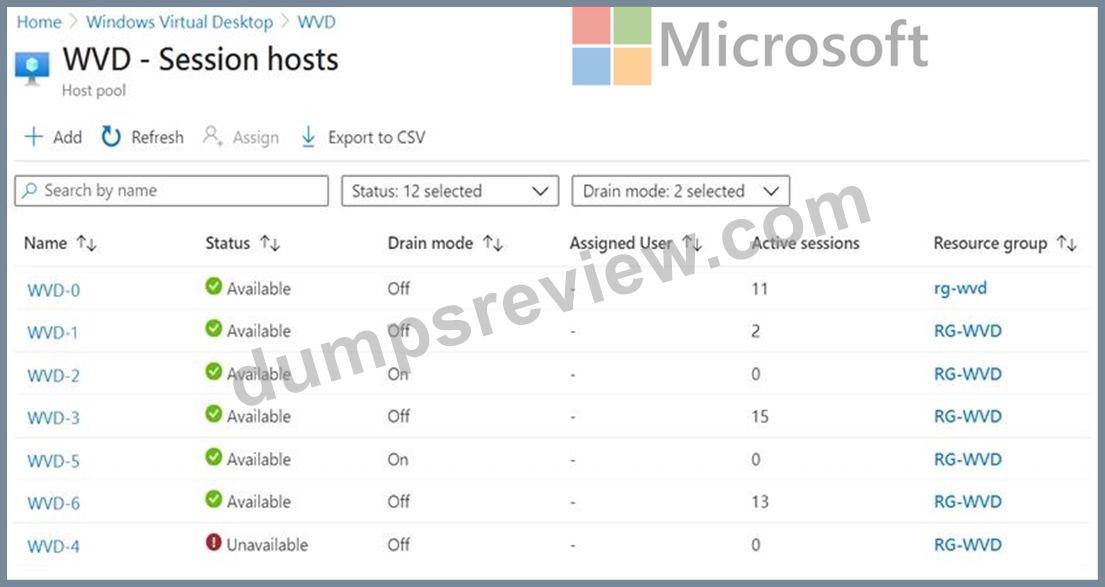
Use the drop-down menus to select the answer choice that completes each statement based on the information presented in the graphic.
NOTE: Each correct selection is worth one point.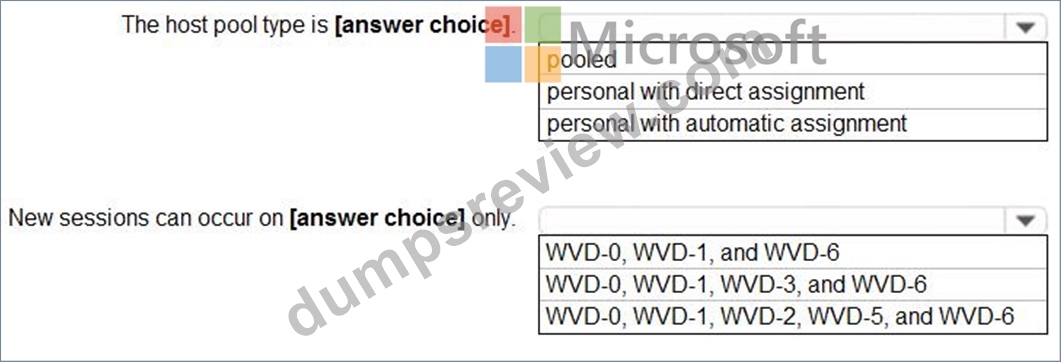
Answer:
Explanation: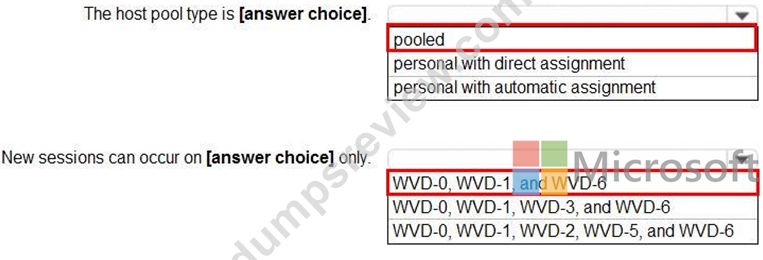
Reference:
https://docs.microsoft.com/en-us/azure/virtual-desktop/set-up-scaling-script
NEW QUESTION # 114
......
Latest AZ-140 Exam Dumps Microsoft Exam from Training: https://www.dumpsreview.com/AZ-140-exam-dumps-review.html
Pass Microsoft AZ-140 PDF Dumps Recently Updated 171 Questions: https://drive.google.com/open?id=1zkJxWDkT5nA-xZ3kN2XIwtpj8xkOcpsq
